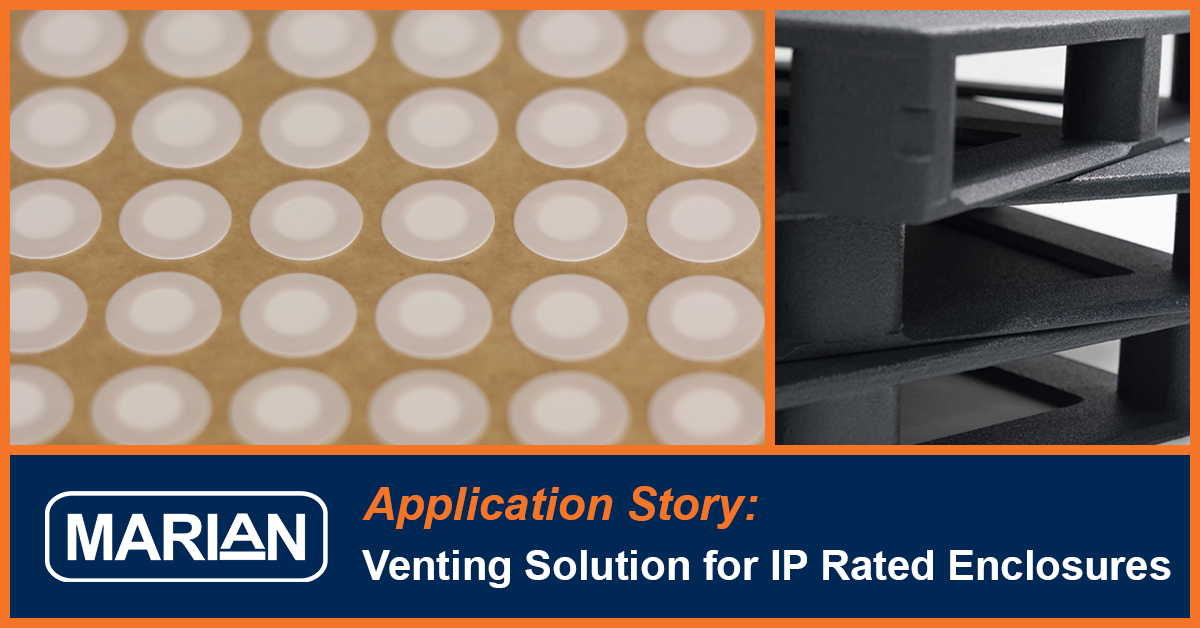
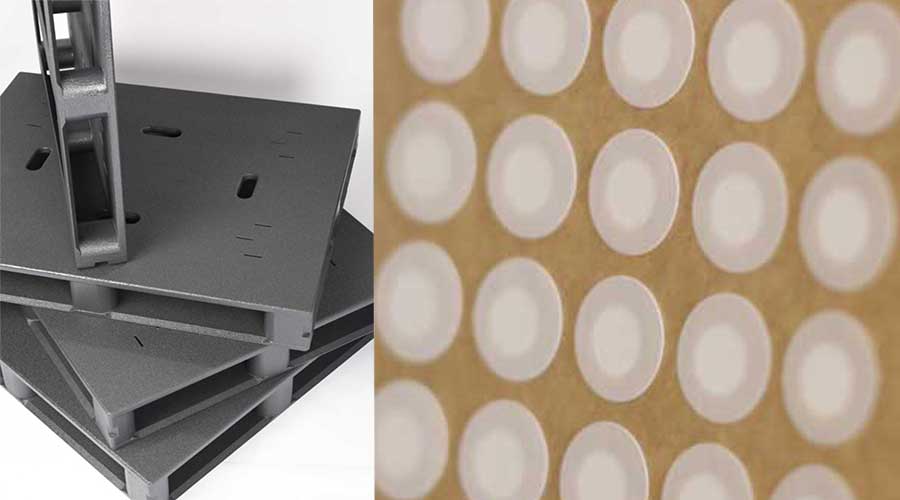
Many everyday items have been reimagined as "smart". From appliances to cars to wearables, users have more insight and trackability than ever before. This additional visibility has even extended into some less obvious places like the shipping and warehousing industries with the introduction of "smart pallets". These pallets offer the benefits of location tracking and active monitoring of environmental conditions.
Keep reading to learn more about this manufacturer of smart shipping pallets and the custom venting solution Marian recommended and designed to meet their requirements.
Read More
Topics:
Manufacturing,
Vent Material,
Material selection,
Die Cutting,
Application Story,
Automated Assembly,
PSA,
Assembly,
Converting
As industries evolve toward smarter, smaller, and more connected technologies, enclosures are facing new challenges. Design engineers are under pressure to deliver lighter, thinner, and safer enclosures that protect sensitive electronics from harsh environments while still meeting demanding performance standards.
This shift is transforming how gaskets and seals are designed and what materials are being used across key markets such as electric vehicles (EVs), medical devices, energy storage systems (ESS), and data centers.
Check out the extended blog on the Rogers website, The Future of Sealing: How Tomorrow's Applications Are Changing, and the video below to see where enclosures are heading and what will be necessary by the teams designing these enclosures.
*Disclaimer: The Enclosure Institute™ is a free educational resource created by Marian, Inc. and Rogers Corporation to help engineers navigate enclosure sealing with expert guidance.
Read More
Topics:
Manufacturing,
PORON,
Vent Material,
Material selection,
Die Cutting,
Automated Assembly,
PTFE Membrane,
Gasket,
Assembly,
Enclosure Institute,
Seals,
Enclosures,
Rogers Corporation,
ePTFE
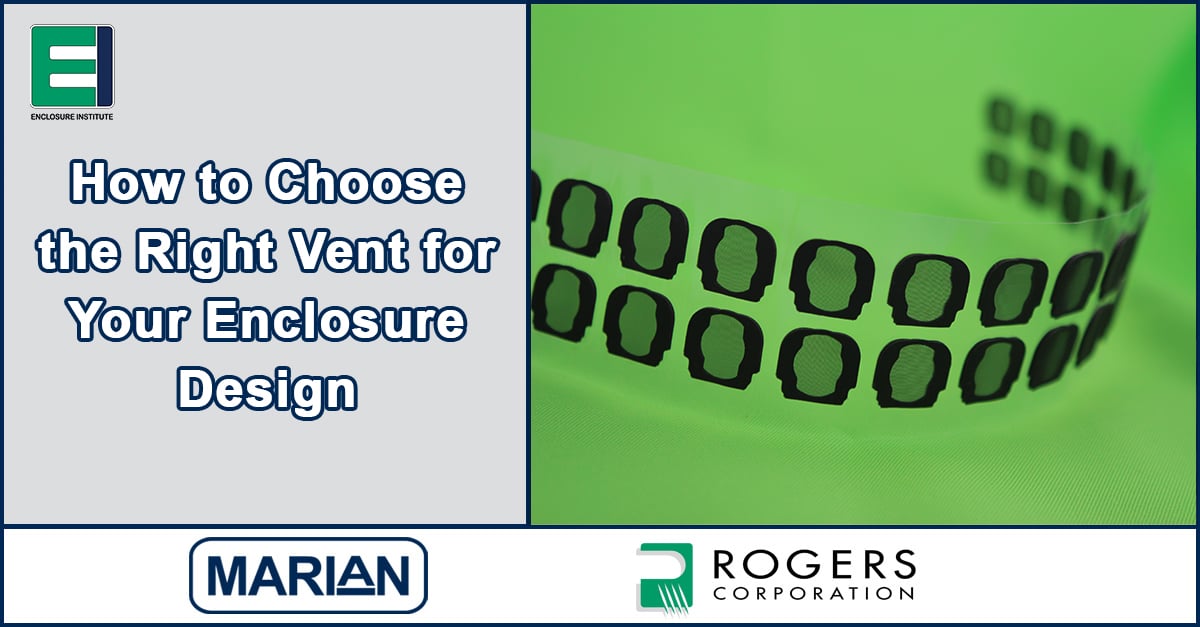
Effective venting is one of the most important yet overlooked aspects of enclosure design. Whether protecting sensitive electronics, automotive components, or sensor systems, proper venting ensures reliability, safety, and long-term performance. By understanding the role of a vent, how venting solution works, why they're necessary, and how to choose the right materials and designs, engineers can create enclosures that maintain functionality even in harsh environments.
Check out the extended blog on the Rogers website, How To Design Effective Enclosure Vents: Balancing Pressure, Moisture, and Protection, and the video below.
*Disclaimer: The Enclosure Institute™ is a free educational resource created by Marian, Inc. and Rogers Corporation to help engineers navigate enclosure sealing with expert guidance.
Read More
Topics:
Manufacturing,
PORON,
Vent Material,
Material selection,
Die Cutting,
Automated Assembly,
PTFE Membrane,
Gasket,
Assembly,
Enclosure Institute,
Seals,
Enclosures,
Rogers Corporation,
ePTFE
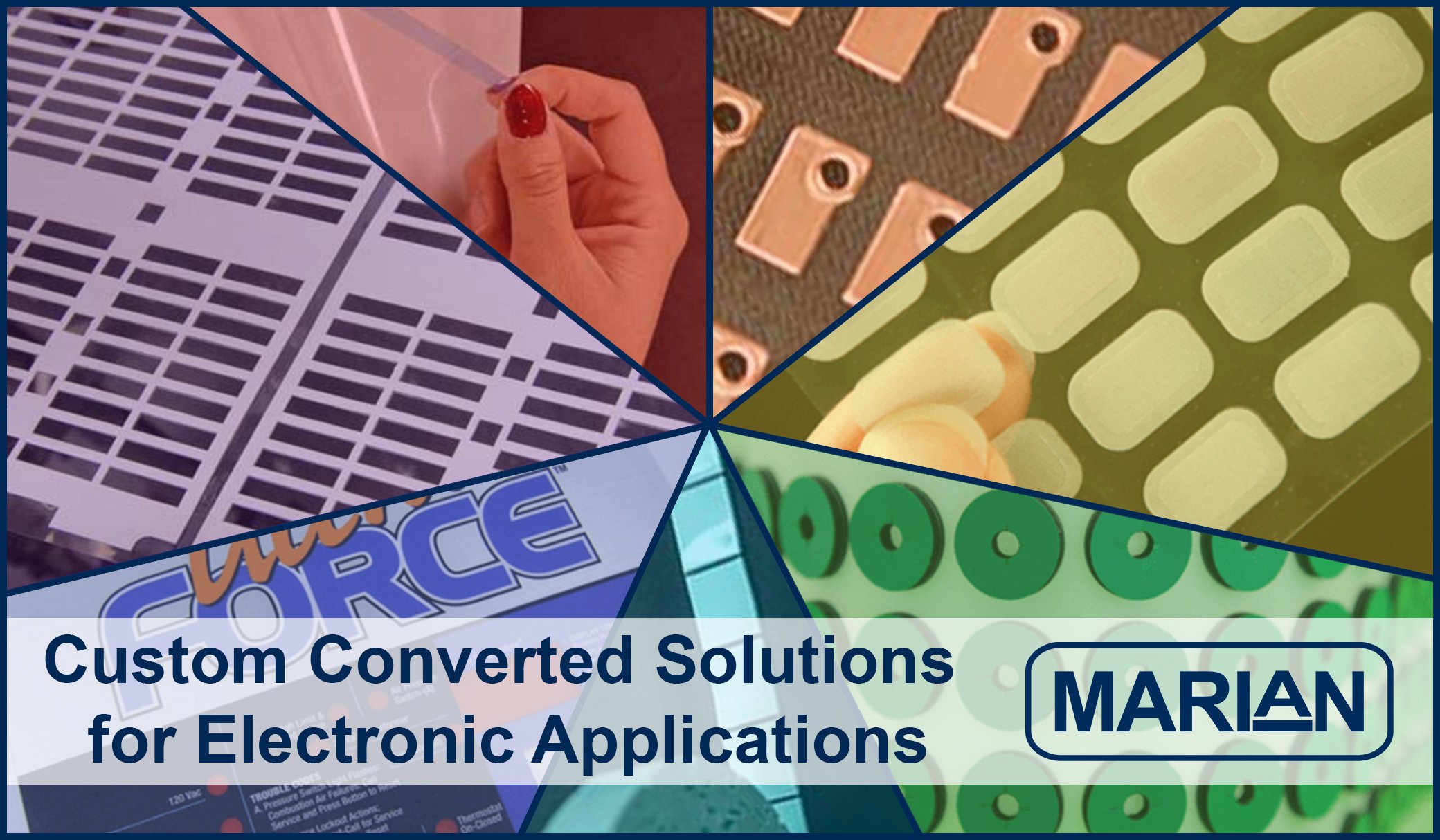
In the fast-paced world, electronics are now integrated into almost every aspect of human life. Solutions ensuring optimal performance and longevity are necessary to meet consumers’ expectations. Many converted electronic components are made using materials that address various challenges faced by electronics applications, including thermal management, electromagnetic interference (EMI), surface protection, and more.
Read More
Topics:
Thermal Management,
Foams,
EMI Shielding,
Surface Protection,
Vent Material,
Die Cutting,
Thermal Pad,
TIM,
Gasket,
PSA,
Films,
Electronics
IP Rated Enclosures: Venting Solutions
Sensors, controllers, and other electronic elements are being integrated into devices across virtually every industry. Many of these products are made for use in conditions where they may be exposed to extreme temperatures, rain, wind, dust, and moisture. (See application story about "smart" shipping pallets linked at the bottom of this post.) Designing such products requires that the container or enclosure holding the electronic components be completely sealed. Exposure to harsh elements could cause a product failure.
Read More
Topics:
Manufacturing,
IP Rating,
Vent Material,
Automated Assembly,
Ingress Protection,
PTFE Membrane,
PSA
Changes in altitude, humidity, temperature, and atmospheric pressure can cause the internal pressure of a sealed enclosure to increase or decrease significantly. Engineers integrate vents into the design of their enclosures to equalize the pressure and prevent problems such as condensation (and shorting of electronics), fogging, discoloration, leaks (failure of the seal), and other failures. Learn how the help of protective vents can keep these issues from arising.
Read More
Topics:
Vent Material